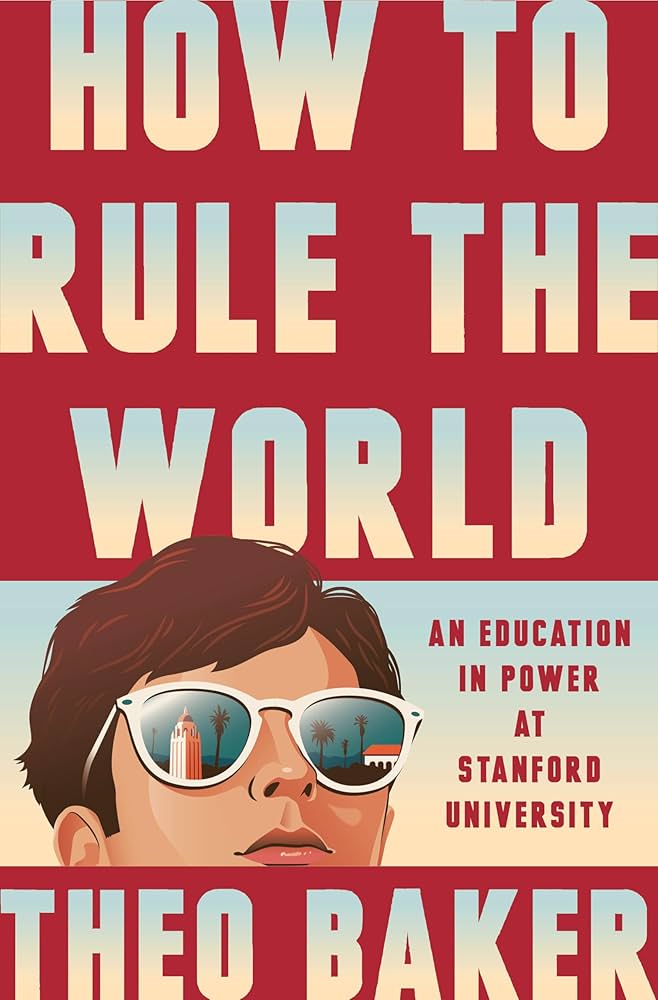
I read Theo Baker’s How to Rule the World: An Education in Power at Stanford University in the last 24 hours. I was entranced, horrified, and amused, often on the same page.
Baker arrived at Stanford as a seventeen-year-old freshman in 2022. By the end of his first year, his reporting in the Stanford Daily had forced the resignation of the university’s president, Marc Tessier-Lavigne, over research misconduct. He became the youngest person ever to win the George Polk Award. He kept reporting.
It’s a memoir of a freshman year spent inside Stanford’s VC pipeline. The “Stanford-within-Stanford” Baker describes - a private club of students being courted by VCs from the first week of school - is something I’ve watched evolve from the outside for years. “Stanford is an incubator with dorms,” one of the VCs tells him. Reading it from the inside is fascinating.
It’s a study in how powerful people respond to inconvenient reporting. The instinct is to dismiss, to delay, to discredit, and to attack the messenger, and only at the end, when there’s no other choice, to acknowledge what’s true. The pattern repeats with Tessier-Lavigne, with the board, and with his proxies and supporters. I’ve seen this happen many times in my life. Baker lives it throughout the book.
It’s an indictment of crisis management at the board level. The Stanford board had every advantage - resources, lawyers, advisors, and time - and they used all of it to make the problem worse. The summary of the investigation report was milquetoast compared to the rest of the document. The crisis management around it - and the effort to manage information flow to Baker - failed. The timing and sequencing of many of the events was painful to read. The whole experience is a master class in what not to do.
It’s a portrait of a polarization problem where neither end of the spectrum is correct. Baker doesn’t flatter either side. The left and the right, the activists and the VCs, the entrepreneurial students and some of the faculty, all turn out to have more in common than they’d want to admit.
The ethics of leadership, the way money distorts a place that is also a university, and the loneliness of being eighteen and knowing what’s coming all show up too.
Plus, it’s a memoir of a very weird year, but includes plenty of typical freshman year stuff. It’s clear that the experience of being at Stanford was profound for Baker, and I loved reading the long acknowledgments where he highlighted many of the people who influenced him positively, both inside and outside of Stanford.
In a great memoir, you finish feeling like you know the person. I felt this way after finishing the book last night.
The reviews I’ve read are split on whether Baker, as the son of two prominent journalists, has the standing to indict the people he’s writing about. One of the attacks during his reporting was that he was a nepo baby. I found the critique tedious. Baker’s reporting is excellent and many of the people who interacted with him had no idea who his parents were.
How to Rule the World: An Education in Power at Stanford University is a delicious read.