I wrote my first post about Looking Glass nine years ago, after Shawn Frayne sat me down in Jeff Clavier’s office and showed me a volumetric display that made me call John Underkoffler and say “John, I finally saw what you were trying to create with your holographic camera.” I invested immediately. I’ve been on the board ever since.
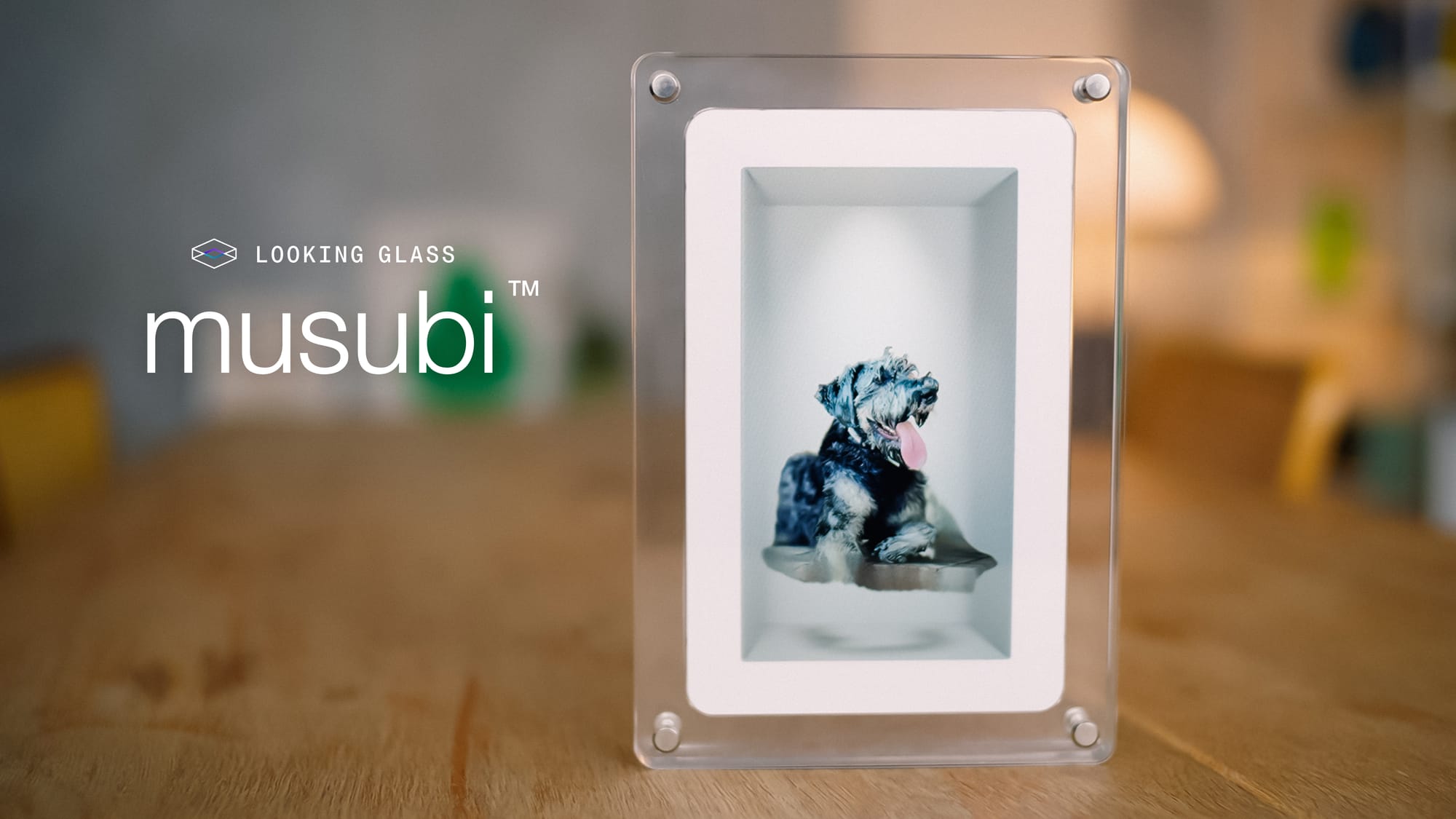
Today they launched Musubi - a 7-inch holographic photo and video frame for $99. It hit its $10,000 Kickstarter goal in minutes. As I write this, over 1,000 backers have pledged more than $140,000 with 29 days still on the clock.
The idea is simple. You take a regular photo or video, drop it into Looking Glass’s free desktop app, and AI-powered Gaussian splatting converts it into a hologram. Transfer it to the frame via USB-C. No Wi-Fi setup, no subscription, no special glasses. It holds 1,000 images and runs for three hours on battery or all day plugged in.
I’ve wanted this specific product for a long time. Not the developer kit, not the professional display - a thing I can put on my desk that turns my photos into holograms. The Musubi is that thing. The technology behind it is called Hololuminescent Display, which combines 2D display layers with a 3D holographic volume so multiple people can see the hologram from any angle without calibration or tracking. It is indistinguishable from magic.
When I wrote about the first Looking Glass in 2018, I called it “Apple II stage” technology - built for creators and hackers. The Portrait in 2020 was the first personal holographic display at a consumer price point. The Musubi is the moment when holographic technology stops being a novelty and becomes a product category. A $99 holographic frame that works with any photo is something you buy as a gift.
Back the Musubi on Kickstarter .