Feld Thoughts

Tag: mental health

I’m currently at the Global Entrepreneurship Congress 2025 in Indianapolis. Yesterday, at the end of the day, I spent several hours at High Alpha hanging out with my friends and then doing a Give First: The Power of Mentorship book event with them and about 150 people.

One of the questions during the book talk was around mental health and entrepreneurship. I talked about my own experiences with anxiety and depression and explained that my core diagnosis, which I was diagnosed with in my 20s, was obsessive-compulsive disorder (OCD). I said that one of my goals for being open was to destigmatize mental health issues, especially in the context of entrepreneurship and mentioned that I periodically hear something like “I’m OCD and it’s my superpower” and dismissed that idea as nonsense, since OCD is an insidious thing that gets in the way of so many things in life.

While I was in hibernation, I conducted a long-form (60-minute) video interview with NOCD, an outstanding company in Chicago that is now the world’s leading provider of OCD treatment. I mentioned it during the talk yesterday, but woke up this morning realizing I’d never blogged about it.

(If you are receiving this via email, a YouTube embed should be included below. If it’s a bunch of text that looks like garbled code, click through on the header of this email to my website to watch this. There’s no need to tell me since I’ll get the same mess in the email as I try to get MailChimp working correctly again.)

In the video, I cover a lot of ground, as shown in the show notes.

0:00 Intro
1:07 If OCD Was A Movie Title
1:58 Underlying Obsessions
3:38 How OCD Has Affected Brad’s Life At Different Points
11:02 Mental Exhaustion And OCD
15:06 Separating The Obsessions And The Compulsions
20:15 Why Brad Speaks Openly About Mental Health
30:42 Dispelling OCD Misconceptions
37:27 Brad’s Purpose
40:27 Brad’s Advice For His Younger Self
51:18 What Companies Can Do For Mental Health
55:12 Post-Therapy Movie Titles
58:30 Outro

Feel free to reach out to me anytime around this topic (OCD or mental health) as it continues to be important to me to destigmatize this, especially in this moment.


After I wrote my post on Unhibernating, my long-time, empathetic friend Christopher Schroeder, whom I originally met through Ben Casnocha (that story is discussed in Give First: The Power of Mentorship), sent me a short note asking, “Have you been ok?”

I responded with a long email explaining why I decided to hibernate in the summer of 2023 and why this hibernation lasted almost two years. After writing a long email (which I’ve been doing a lot of during my hibernation), I asked Chris if I could post my response to my blog, and he said, “Of course.”

The following is my answer to Chris’s question, “Have you been ok? ” I’ve edited it for grammar.


Yes – I’ve been ok.

A couple of things were going on that converged in the summer of 2023.

  • I realized I was completely burned out from public stuff. The inbound requests were endless, and even though I could say no to many of them, I wasn’t enjoying them.
  • I was tired of the VC industry and its noise. The endless self-promotion combined with “I know the answer – look at me” mixed with thought pieces ghostwritten by marketing professionals and then endless VC Twitter from the same person, much of which didn’t line up philosophically, got me down. And, well, podcasts are so easy compared to writing – the person blathers on about whatever is on their mind, reacts to a current thing, and influences so many with such thin suppositions that are often nonsense.
  • Some people I thought I’d respected had shifted some of their behavior, not as extreme as it is now, but it was increasingly distasteful to me. 
  • Critical thinking seems to have been discarded in many parts of my world. The view was, “If I assert something loudly or strongly enough, over and over, it becomes the truth.”
  • We had closed our latest fund (spring 2023), and I wasn’t enthusiastic about making new investments. After—I dunno—a thousand direct investments, hundreds of fund investments, and a zillion indirect investments, I was cooked.

So, I took a break from all public engagement. It took me about three months to stop looking at anything but I eventually whittled it down to the daily Techmeme email. I also unsubscribed to almost everything, so my inbox became only work and personal emails. I even unsubscribed to Axios Pro Rata (by far the best VC daily) for a while.

I worked plenty (15 boards, supported anyone in our portfolio that needed help), spent a lot of time with Amy, continued not to travel for work, read a few books a week, and ran a lot. I continued supporting philanthropic and government efforts in the background, helping anyone who wanted to lead, but not being public or forward-facing. I also shifted to default no on everything, so I needed a close relationship with someone asking for help to say yes.

I was in great physical shape and planned a three-week, 300-mile run across New York State on the Empire Trail in August 2024. Jerry Colonna would accompany me in an SUV, move my stuff from place to place, and hang out with me when I wasn’t running. And then, Amy and I got Covid for the first time on June 2nd. After being diligent, avoiding it for a long time, and being very hermit-like, I got it randomly during a month in Boulder, where Amy and I were more social than usual. I never figured out who I got it from, and didn’t appear to give it to anyone we were with, so it was as random as it gets.

I tested positive for 21 days and felt extremely crappy for six weeks. I cancelled my run across New York State and, as the summer unfolded, realized I was exhausted all the time. If I went for a three-mile run, I’d have to sleep for a few hours in the afternoon just to be functional. This continued into the fall, after which I accepted that I needed more sleep. Nine months later, I sleep 90 to 120 minutes more a night than I used to (I haven’t used an alarm clock since 2013, so I get up when I wake up.) I’m running a little more (maybe 10 – 15 miles a week), but if I run over 20 miles weekly, I fall apart and need to rest for two to three days. Maybe it’s long Covid, but no one knows what this means. Perhaps it’s sneaking up on 60. Maybe it’s something else.

I picked up Pilates and got disciplined through the winter (twice a week). I’m stretching more (age). I’m trying to get into a weight lifting rhythm (I have inadequate upper body strength – I’ve always been an upper body wimp). But I’m accepting age and know that strength is vital to longevity. I lost a lot of weight (thank you, gila monsters, for helping with that), and all my bloodwork, including cholesterol, is in a normal range for the first time in as long as I can remember.

I worked on Give First: The Power of Mentorship a few years ago after finishing The Entrepreneur’s Weekly Nietzsche: A Book for Disruptors, sent it out to about 25 people for feedback, and, after getting the feedback, was pretty unhappy with the state of the book. I decided to put it on the shelf. I took it down in the fall and started working on it again, but slowly. By the end of the year, I had restructured and rewritten a lot of it, and was excited about it again. I felt my internal energy around engaging with people starting to build up again, and upon reflection, realized how depleted I was in the summer of 2023.

Amy and I are doing great. She continues to be an amazing partner, and I’m overjoyed to spend most of my time with her (both waking and asleep!). While I’ll travel a little this summer, maybe she’ll come with me—or maybe not. 

Regardless of everything going on in the world, I’m ok. Thanks for asking.


Startup Snapshot, a data-sharing platform for the entrepreneurial ecosystem, recently released its latest report, The Untold Toll: The Impact of stress on the well-being of startup founders and CEOs.

Clearly, the emotional state of founders and entrepreneurs in any period, especially now in this economic environment, is a critical driver of success. Yet the emotional, cognitive, and physical toll that founding and leading a startup takes is dangerously overlooked and rarely spoken about. 

Startup Snapshot is illuminating the current state of the startup mindset through global data collected from hundreds of founders in startups of all sizes, in all verticals. It’s the largest study of its kind. And it is honest and gritty, with no punches pulled.

  • The startup grind takes a major toll on a founder’s mental health. 72% of founders reported that the entrepreneurial journey affected their mental health, 37% suffered from anxiety, and 36% from burnout.
  • Founders are known for their innovative spirit, but in terms of therapy, they are stuck in the past. Only 23% of founders report going to a psychologist or coach.
  • 50% of founders report a negative stigma around professional mental health support. Surprisingly, the stigma is higher for younger founders, with 59% of founders under 35 reporting a negative stigma, compared to only 47% of founders over 35. 
  • Founders mask the stress, and it catches up to them. 81% of founders reported they do not openly share their stress, fears, and challenges, worried that vulnerability could affect their reputation or chances of success. 
  • Venture capitalists need serious self-reflection as their portfolio companies don’t turn to them for support. Only 10% of founders reported that they talk to their investors about their stressors, worried that transparency could affect their chances of securing additional funding. 

Startup Snapshot is continuing to research founder mental health, if you want to take part in normalizing the dialogue around this important topic, reach out to yael@ybenjamin.com.


After my post about the Founder Mental Health Pledge, I received a note from Kari Palazzari, the Executive Director of Studio Arts Boulder, a local nonprofit that manages a community pottery studio. She lamented that very few members of the Boulder startup community seem to take advantage of their programs.

She said, “Studio Arts Boulder would love to help support the Founder Mental Health Pledge.”

A couple of my local colleagues have taken classes at the pottery studio, and they speak avidly about the impact of working with clay. It helped them be less stressed and more focused, which makes a big difference when tackling a startup’s unique problems. Kari said, “People come out of the studio less twitchy, for sure.”

There’s a lot of data about the impact of the arts. Making art, in particular, helps combat anxiety and depression. It improves cognitive function by making our brains more resilient and flexible, which means we become more creative problem-solvers all around. 

We can tackle the mental health challenges within our industry in many ways, and I encourage more of us to try art. Start small with a date night – offered by Studio Arts Boulder every Saturday. Or better yet, schedule a private program for your team at your office or in the pottery studio.

And if clay isn’t your jam, early next year, Studio Arts Boulder is opening a new facility that will include woodworking, blacksmithing, printmaking, and glass art studios. How cool is that?


Since the middle of last week, there has been extreme stress on founders, startup leaders, and the extended startup community. This stress accelerated on Friday when the FDIC shut down and took over Silicon Valley Bank. By late Friday, anyone who banked with SVB was concerned about … well … everything.

Once it became clear that payroll accounts needed to be funded on Monday to make Wednesday’s payroll, we focused on the immediate short-term to ensure our portfolio companies’ thousands of employees got paid on time. We bank at SVB, so our maneuverability was also unknown, so we searched for what I’d consider heroic options from various sources.

While this de-escalated on Sunday night after the US Government took decisive action, the level of stress and anxiety, especially for first-time founders, was extreme. I had many 1:1 conversations, emails, and messages with our portfolio company CEOs, along with several open Zoom lines where people could ask questions and just commiserate and feel part of a shared community. Much of this focused on addressing the immediate problem. But, many founders told me that just feeling part of a larger community was helpful.

Much will be written about this. Maybe I’ll get around to my version someday.

But, once again, I saw and experienced the extreme stress and anxiety that founders, CEOs, and leaders of startup companies face almost daily. It reinforced the importance to me of continuing to help destigmatize mental health (and mental fitness) issues across the startup community.

Yesterday, Aaron Gershenberg, a long-time friend and LP of ours from SVB Capital, emailed an introduction to Naveed Lalani, Founder & CEO of Pioneer Mind. Naveed has launched a Founder Mental Health Pledge for Investors and Startup Leaders. 

He’s announcing the first supporters tonight. Foundry is supporting it as a firm, and I’m supporting it personally along with my partner Jaclyn Hester.

If you are interested in signing Founder Mental Health Pledge for Investors and Startup Leaders, please email Naveed at naveed@pioneermind.com 

The pledge follows:

We make a commitment to take an active role in encouraging mental healthcare for founders and the greater startup community.

We pledge to encourage the founders we partner with to invest in their personal mental health and build a workplace culture that promotes mental health. 

Ensuring the mental health of founders and their teams is crucial and leads to the highest probability of startup success. We pledge to be supportive of founders treating the direct cost of caring for their mental health as a legitimate, worthwhile, and encouraged business expense – including therapy, coaching, group support, and app-based solutions. Founders should look at their mental health as a business priority.


Since Matt Levine is so effectively covering anything interesting in the world of the Twitter deal (and all kinds of bizarre, random, and complicated crypto, fraud, debt, and other financial stuff), I think I’ll stick with book reviews for the time being.

Andy Dunn, who I only know indirectly, wrote an important book titled Burn Rate: Launching a Startup and Losing My Mind. While it covers the story of Andy’s company, Bonobos, it’s really about mental health and entrepreneurship.

While there might be other entrepreneur autobiographies like Burn Rate, I can’t think of any. The closest is Tracy Kidder’s awesome book titled A Truck Full of Money about Paul English, an entrepreneur I do happen to know.

Tracy’s book is a mix of Paul’s entrepreneurial story combined with his experience being bipolar. Andy’s book is his entrepreneurial story combined with his experience of being bipolar. Both are remarkably brave books. Andy’s autobiography is particularly powerful since he is extremely detailed about several of the manic experiences that he had while running Bonobos.

While I don’t know Andy, I know several of his investors. His description of how they handled the situation of discovering Andy’s mental health diagnosis made me proud to know them. Andy decided to proactively hold a board meeting to describe what had happened that resulted in him ending up in the hospital and jail. One of his board members, Joel Peterson (who I don’t know), is remarkable.

“When I got out of the hospital, I walked straight into handcuffs. The City of New York charged me with misdemeanor assault and felony assault of a senior citizen.”

“Has there been a diagnosis?” Joel Peterson asked.

“The diagnosis is bipolar disorder type I. I was originally diagnosed when I was twenty, and I’ve been in denial about it for sixteen years.” A brief silence.

“I know a few folks who have dealt with what you’re dealing with, Andy,” Joel said calmly, holding true to his role as my professional father figure, “including more than a couple of entrepreneurs. It’s entirely manageable. I have full faith in you to take care of yourself, and I have full confidence in you as our CEO.”

Andy covers the rest of the board meeting discussion, including questions from board members about whether he was getting appropriate treatment, his legal situation, and the game plan for addressing any publicity around the situation.

A while ago, I was at a dinner with a bunch of VCs and entrepreneurs, including several very famous ones. One of the entrepreneurs stated clearly that if he ever talked openly about his struggle with depression, his board would immediately fire him. Fortunately, this was not the response of Andy’s board, as they took in the situation, asked questions about it, and made rational and deliberate decisions about what to do going forward. It’s worth noting that Andy was still the CEO of Bonobos when Walmart acquired it several years later.

I’m hopeful that Andy’s book will continue to help destigmatize mental health in entrepreneurship. Thanks, Andy, for being willing to write such an intimate story about your experience.


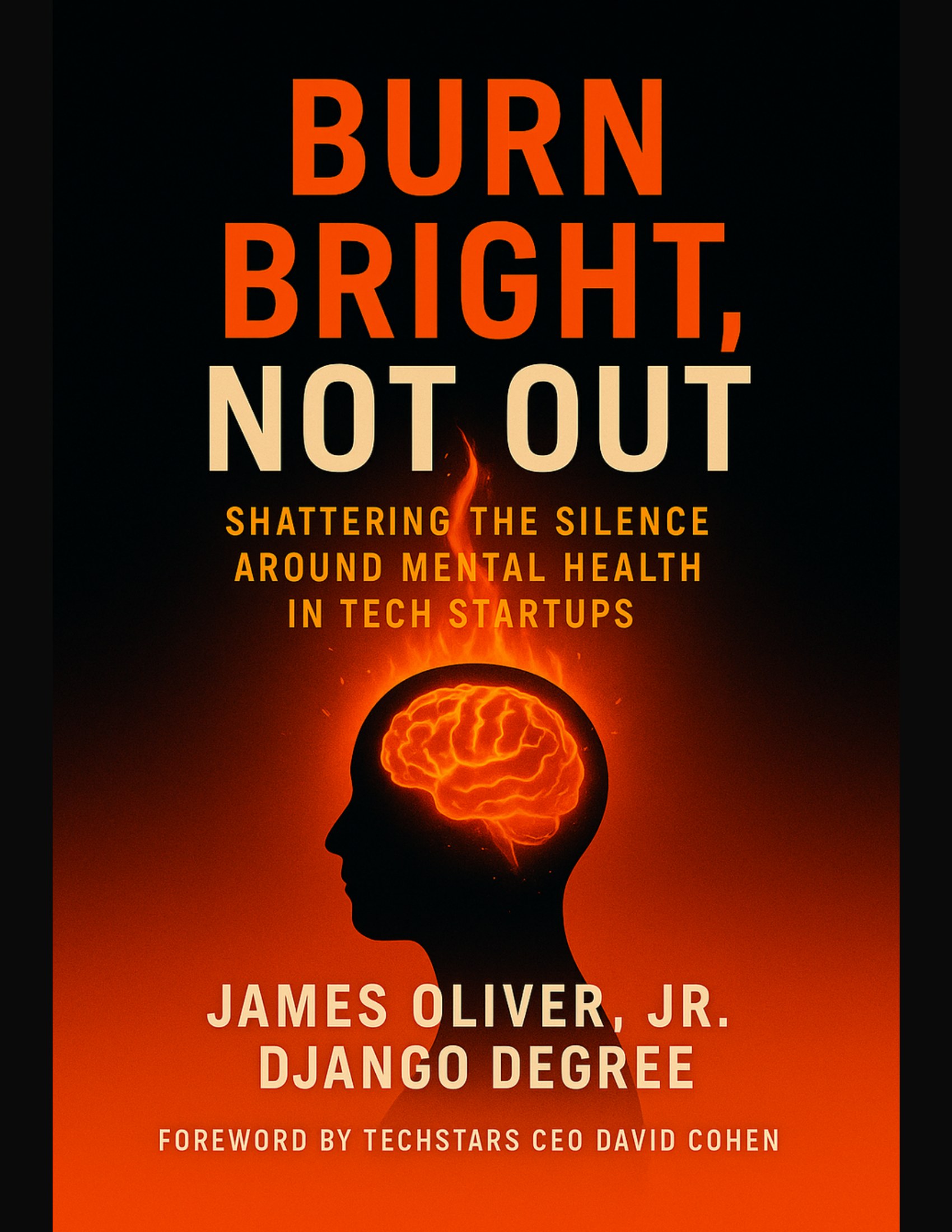
David Cohen and I have co-hosted the Give First podcast for 71 episodes. I think our host ratio is 80/20 David/Brad, and he’s covered everything in 2021 because I was burned out on all things public-facing and needed a break.

He figured a good way to get me back in the mix would be to interview me about entrepreneurship and mental health, so that’s what Episode 71 is about.

Listen & subscribe to the Give First podcast on Apple PodcastsSpotify, and more.


One of my mantras for v54 is “Simply Begin Again.”

As I get closer to v55 (58 days from now), I’ve been thinking about it more. During my morning meditation, I repeated it for a stretch and then did the same for about a mile on my run this morning.

Garth gets so many things correct.

I made a big shift earlier this summer after I finished up some of the work I was doing with the State of Colorado around Covid, specifically around the Innovation Response Team. A lot of that energy shifted to new work around racial equity and the release of my new book with Ian Hathaway The Startup Community Way. At the same time, my Foundry Group workload intensified as companies shifted from “survive Covid” to “grow like crazy because of tailwinds from Covid and adjustments made during Q2.”

When I reflect on where we are in October, 2020, I’m amazed. There is a spectrum that has awesome at one end and awful at the other. I’m engaged on both ends and spent relatively little time in between them. The inequities that exist on so many dimensions of our existence are extremely visible to me right now.

My gear shift around each day has been profound. I’ve adopted a set of new habits for the beginning and end of the day. I start each day with 30 minutes of meditation (I’m on a year and a half streak), then have 15+ minutes of coffee with Amy, and then go running three or four days a week. It’s a full reset every morning, which has had a profound impact on my attitude to everything that then follows.

Next, Amy and I try to have a 30 minute lunch every day. We probably miss a day a week, but right after I hit post, I’m going to go have lunch with her. We’ve never done this during the week before and I hope to do this with her every day for the rest of my life.

At the end of the day, which ranges from 5pm to 8pm, I’m done. I no longer try to get through all my email. I no longer do one last check before I go to bed. I just stop for the day.

And then I simply begin again the next day.


Daniel Jackson created a magnificent book. It’s a combination of three things: 1) Extraordinary personal stories about 2) The struggle with mental health, anxiety, and depression while 3) at MIT.

MIT is a foundational part of my life. I spent seven years there. I got into graduate school in my fourth year and got into a Ph.D. program in my fifth year. I also started three companies while I was there – the first failed after my sophomore year, the second failed after my junior year, but the third turned into Feld Technologies, which was my first successful company.

I vividly remember my first major depressive episode. It was 1990. My first marriage had fallen apart. My company was doing fine, but I was bored with the work. I knew my Ph.D. journey was doomed, but I hadn’t accepted it yet.

While I had theoretically experienced failure, none had felt very personal up to this point. When I flashback to MIT undergraduate failure, it was dropping out of courses like 18.701, which I had no business taking when I did. Or it was getting a 20 on my first 8.01 test, only to find out a few days later that class average was a 32.

But the failures in 1990 were real and personal. I had a fantasy about my first marriage, which was also my first adult relationship (which had started in high school.) My divorce obliterated that fantasy. I had created a narrative about myself, if only in my head, that I was an overachiever at the youngest possible age – my company, my Ph.D., my marriage. When the second of those, the Ph.D. blew up, a deep depression ensued.

I was lucky – I had three people in my life who showed up for me in profound ways. The first was my Ph.D. advisor, Eric von Hippel, who protected me from the worst of what could have been the emotional fallout from MIT while providing me with the best he could as a paternalist-non-parent. The next was my now wife, Amy Batchelor, who knew I was depressed, called it out, and encouraged and supported me through understanding what was going on. Finally, my business partner, Dave Jilk, showed up as a partner every day. I don’t think he understood what I was going through or what to do, but what he did was what I needed.

That was almost 30 years ago.

Depression can be a fiendishly challenging thing that some us call the black dog. Today, when it shows up, I pet it on the head, talk nicely to it, and encourage it to find somewhere else to play. But, for a while in my 20s, it took up residence in my dark, opaque box, which spent a lot of time in a 24,000 cubic foot apartment at 15 Sleeper Street and eventually migrated to 127 Bay State Road. At some point, the black dog got bored of that apartment and went somewhere else for a while.

Reading this book made me wish this book existed then. I remember feeling incredibly alone at MIT, in Boston, and the world. Once I acknowledged to myself that I was depressed, I knew I wasn’t the only person in the world who was depressed. But I was so terrified about it and felt so much stigma and shame around my depression that I built a dark, opaque box around myself and only let a few people in during that time. If this book had existed, I would have looked at the photos, read the stories, and realized both that I wasn’t alone and that I eventually could be ok.